
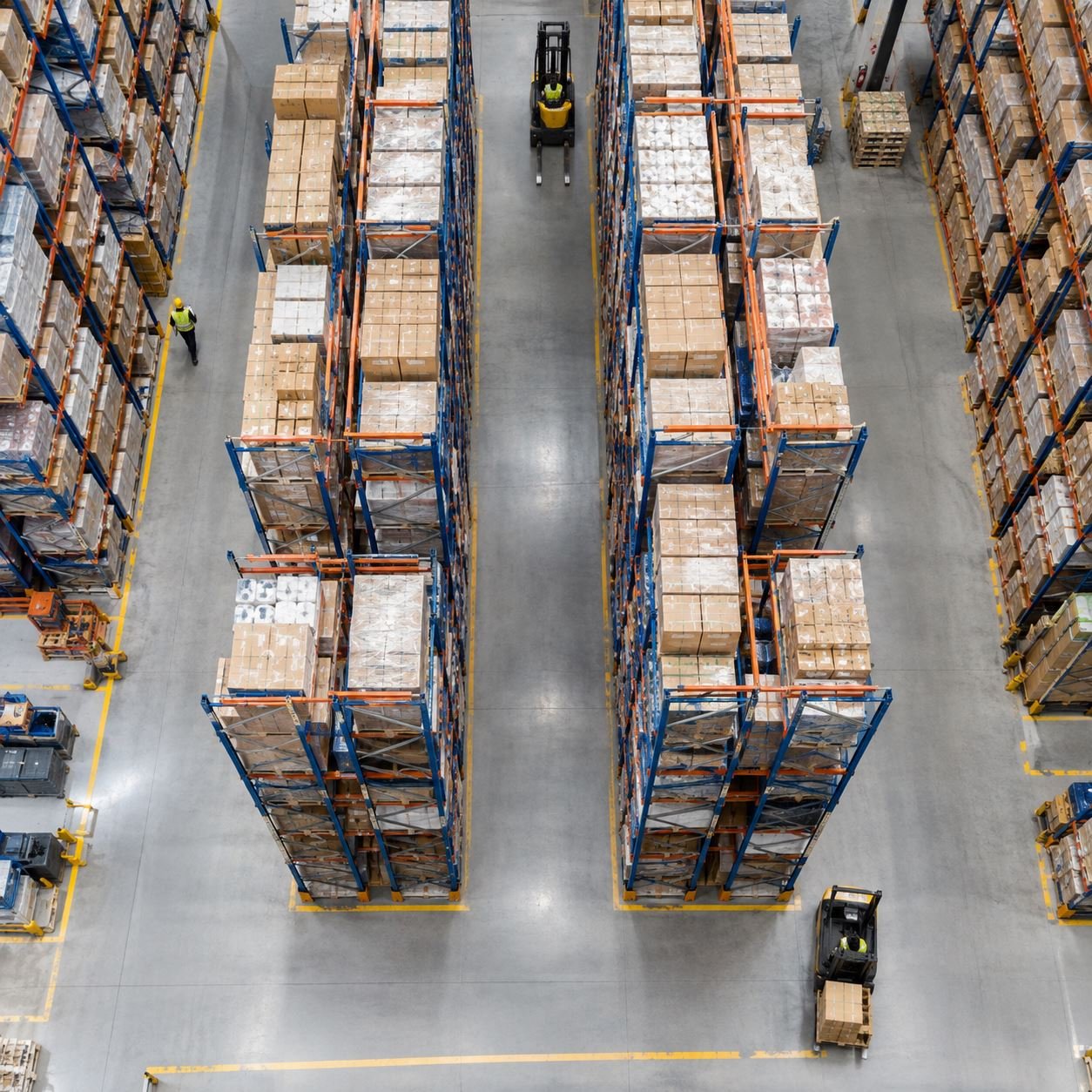
Rent, construction and land costs keep rising, yet many warehouses in India use only a fraction of their real storage capacity. Pallets sit on the floor, aisles are wider than they need to be, and the space above head height is left empty. Good warehouse space management fixes this, often letting you store 30–50% more in the same building.
Here are ten practical steps we use when planning storage for our clients.
1. Start With a Space and Inventory Audit
You can't improve what you haven't measured. Record your clear building height, column positions, dock doors, fire exits and floor condition. Then list what you store: pallet sizes, carton sizes, weights, number of SKUs and how fast each moves. This data decides everything that follows — rack type, aisle width and layout.
2. Use Your Vertical Space
Floor area is expensive; height is almost free. If your building has a clear height of 8–10 metres but stock is stacked only 2 metres high, most of your cube is wasted. Pallet racking lets you store safely up to the full usable height, multiplying the number of pallet positions on the same footprint.
3. Match the Storage System to the Product
No single rack suits every product. A well-planned warehouse usually combines several systems:
- Palletised goods: selective pallet shelving for full forklift access.
- Heavy cartons and loose goods: heavy duty racks loaded by hand.
- Small parts and light items: slotted angle or section panel racks.
- Long items like pipes and timber: cantilever racks.
- Items with expiry dates: FIFO flow racks for automatic stock rotation.
4. Add a Mezzanine or Two Tier System
If your operation depends on manual picking rather than forklifts, a mezzanine floor or two tier rack can nearly double usable area without any civil construction. Mezzanines are also excellent for moving offices, packing stations or light assembly off the main floor.
5. Optimise Aisle Widths
Aisles often take up 40–50% of the floor. Size them to your actual handling equipment: a hand pallet truck or stacker needs far less turning space than a counterbalance forklift. Narrowing aisles by even half a metre across a large warehouse can free space for several extra rack runs.
A good layout isn't about fitting in as many racks as possible — it's about balancing storage density with fast, safe movement of goods.
6. Slot Products by Movement (ABC Analysis)
Classify SKUs by how often they are picked. Fast movers (A items) belong close to the dispatch area at waist height. Slow movers (C items) can go on upper levels or at the far end. This simple exercise reduces walking time and makes the same space more productive.
7. Keep Receiving and Dispatch Areas Clear
Staging areas quickly fill with pallets that never get put away. Define clear floor markings for receiving and dispatch, and set a rule that goods must be racked within a fixed time. Equipment such as dock levellers and hand pallet trucks speeds up the flow so the dock never becomes a storage zone.
8. Label Everything
Every rack, level and bin should have a clear location code. Labelled locations make stock easy to find, speed up training for new staff, reduce picking errors and are the first step towards using a warehouse management system.
9. Plan for Growth
Choose modular systems that can be extended or reconfigured. Boltless racks and adjustable beam levels let you adapt as your product mix changes, instead of replacing the whole system every few years.
10. Don't Compromise on Safety
More storage means more weight overhead. Always display load capacities, fit column guards at aisle ends, anchor racks to the floor and inspect regularly for damaged uprights or missing locking pins. A safe warehouse is a productive warehouse.
Need Help Planning Your Warehouse?
StackPro Industries offers a free site survey and layout plan for warehouses, factories and stores across India. Our team will measure your space, study your products and recommend the most efficient combination of racks, mezzanines and material handling equipment. Contact us or call +91 99716 61873 to get started.